

The Elon Musk–Rahul Gandhi tweet exchange has turned Starlink India into a political flashpoint. But India’s internet policy cannot be settled by a billionaire’s frustration or a politician’s sarcasm. It must serve Indian citizens, protect national security and encourage fair competition.
By Sai Venkatesh Talks | Published 9 October 2026 | News analysis and opinion. The factual position below reflects information available at publication.
Here is the crucial correction: Starlink has received Indian licensing approvals, but a licence is not the same as permission to begin commercial services. The remaining process matters. Describing the situation simply as India refusing to introduce Starlink leaves out that distinction.
What happened in the Elon Musk–Rahul Gandhi tweet exchange?
On 8 October, Musk escalated his criticism of the delay to Starlink’s India launch. He claimed that powerful business interests were obstructing entry and subsequently questioned Mukesh Ambani’s influence. He also said Starlink had spent five years meeting Indian requirements and operated under licences in more than 165 countries. These are Musk’s statements; the allegation of obstruction is not an established finding. The Indian Express reported the exchange.

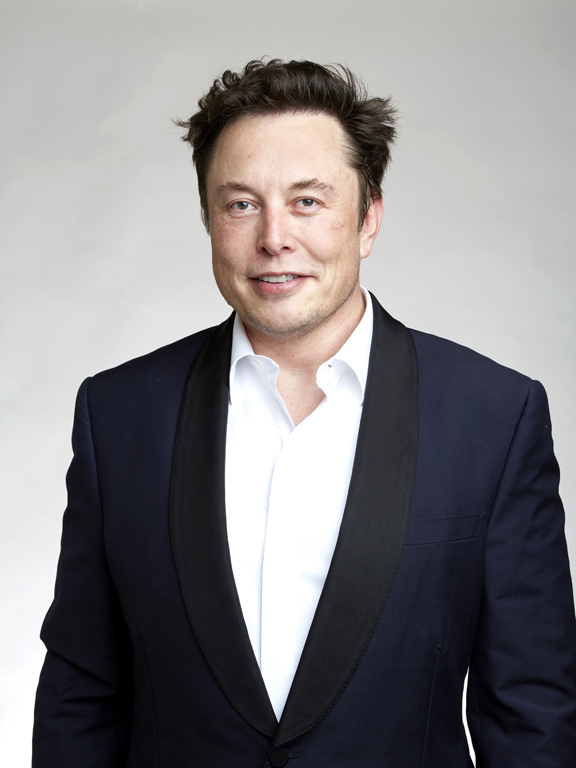
File photo: Elon Musk, July 2018. Credit: Duncan Hull / The Royal Society, via Wikimedia Commons, CC BY-SA 3.0. Existing cropped version; no additional editorial alteration.
Rahul Gandhi replied: “Welcome to India, Elon. Wait till you discover the other guy.” Musk answered: “Thank you, Rahul. This is indeed troubling.”
Gandhi did not name the person he meant. Reading the remark as a political jab is an interpretation; it does not establish who caused a regulatory delay. The exchange raised attention, but supplied no documentary proof that a particular industrialist had blocked clearance.


File photo: Rahul Gandhi at Stanford, 2023. Credit: Rahul Gandhi’s YouTube channel, via Wikimedia Commons, CC BY 3.0. Cropped still from the original video; no additional editorial alteration. Neither photo depicts the October 2026 exchange.
Why has Starlink India not launched commercially?
The clearest official explanation is the Ministry of Communications statement of 8 October 2026. It says three non-geostationary satellite-service licensees are undergoing security assessments. Each must demonstrate compliance with security conditions. After completing that process, a licensed entity can seek spectrum assignment. The ministry says all three are broadly at the same regulatory stage and rejects allegations of discriminatory treatment.
That means licensing, demonstrated security compliance and spectrum assignment are separate steps. A company’s confidence that it has met the rules does not substitute for the regulator completing its assessment. Equally, an assessment should produce a clear decision rather than become an indefinite explanation.
The official statement does not identify every outstanding company-specific issue, give a completion date or prove why each assessment has taken as long as it has. We should not invent those details. There is no confirmed commercial launch date in the official statement cited here.
What is Starlink, and where could it help India?
Starlink describes its system as broadband delivered through satellites in low Earth orbit. Its standard broadband service connects through customer equipment rather than relying solely on a nearby terrestrial tower or fibre connection. Satellite broadband and satellite-to-mobile offerings should not be treated as identical products.
For India, the strongest potential use is closing difficult connectivity gaps. Remote settlements, island communities and locations where terrestrial infrastructure is hard to build could benefit if service is approved, reliable and affordable. Disaster response could also benefit from an additional communications option. These are potential applications, not promises that every village will immediately receive cheap internet.
Before judging affordability, we need verified Indian commercial terms: equipment cost, installation, monthly charges, taxes, support and actual performance. Overseas prices or promotional claims cannot establish what an Indian household will pay. A useful technology becomes meaningful only when people can access it sustainably.
Why security scrutiny deserves a serious discussion
A communications network is infrastructure on which people and institutions may depend. The policy questions therefore go beyond download speed: who controls service continuity, how user data is protected, how misuse is investigated and how the operator complies with lawful Indian directions.
Reuters reported that Indian authorities recovered Starlink equipment during a drug seizure in the Andaman and Nicobar Islands and an army operation in Manipur in late 2024. Musk said the company’s beams were inactive over India. Equipment recovery alone does not prove that service was active, or that the company knowingly enabled wrongdoing. Read Reuters’ account.
My position is straightforward: investigate evidence carefully and insist on enforceable safeguards. Neither dismissing every concern nor treating every recovered device as proof of guilt helps India make a sound decision.
Rahul Gandhi should ask for evidence and accountability
The Leader of the Opposition has every right to question delays and possible favouritism. Scrutiny is part of democratic accountability. But a sarcastic exchange with a foreign business leader is not enough to establish regulatory capture.
The useful questions are concrete: which conditions remain unmet, are the same standards applied to every operator, and what timeline can the government publish without revealing sensitive information? If there is evidence of improper interference, it should be presented and investigated.
My criticism of Gandhi’s response is that it adds a political punchline where citizens need a policy explanation. He should push for transparent answers. The government should provide them. That would produce more value than another round of social-media applause.
Elon Musk must respect India’s process—and India must explain it
Musk can legitimately seek clarity, challenge delays and argue for competition. But success in other markets cannot automatically confer a right to operate in India. International scale is relevant experience; it is not a substitute for domestic approval.
At the same time, Indian regulators should distinguish genuine outstanding requirements from avoidable administrative delay. Once a company demonstrates compliance, the country benefits from a predictable route to a decision. Public explanations should state what can be disclosed, while protecting sensitive security information.
The appropriate response to allegations is evidence and a fair process. A famous foreign investor should receive neither a special exemption nor an arbitrary disadvantage.
Nation First: citizens before corporate or party interests
Nation First means secure connectivity, meaningful choice and accountable institutions. It does not mean defending every government decision automatically or treating an Indian company’s commercial interests as identical to the country’s interests.
The same principle applies to foreign businesses. A company may offer valuable innovation while pursuing its own revenue and market share. India should welcome useful investment on terms that protect its people and sovereignty.
I would judge every operator against the same practical tests: compliance, service quality, affordability, protection of users and a credible contribution to underserved communities. Competition should improve citizens’ options. Security rules should be enforceable. Decision-making should be timely.
For related coverage of India’s technology choices, explore our Technology articles and National analysis.
Starlink India: frequently asked questions
Is Starlink completely banned in India?
The position described in the sources is an incomplete commercial approval process, despite licensing progress. Calling it simply a blanket ban would misrepresent that position.
Is Mukesh Ambani proven to be blocking Starlink?
No finding establishing that allegation is supplied by the sources cited here. Musk made accusations; the government denied discriminatory treatment.
When will Starlink launch, and what will it cost?
The official statement cited here provides no confirmed launch date or retail price. Readers should check announcements from the regulator and Starlink before making purchasing decisions.
India’s interests must decide the outcome
My stand is clear: if Starlink meets India’s requirements and offers useful service, there should be a fair path to launch. If requirements remain unmet, a tweet cannot waive them. If delays are avoidable, accountability must follow.
Technology is welcome. Compliance is essential. India’s interests come first. The outcome should be better connectivity and stronger trust in the process—not a victory lap for a politician, a billionaire or an incumbent.
What should the government disclose about the remaining approval steps, and which underserved areas should satellite broadband prioritise? Share your view with reasons.
Sources and editorial note
Ministry of Communications / PIB, 8 October 2026; The Indian Express, Musk–Gandhi exchange; Musk’s reply on X; Reuters, approvals and security context; Starlink technology information.
This article combines sourced reporting with the author’s Nation First opinion. Allegations are attributed rather than presented as proven facts. Regulatory status may change after publication.