


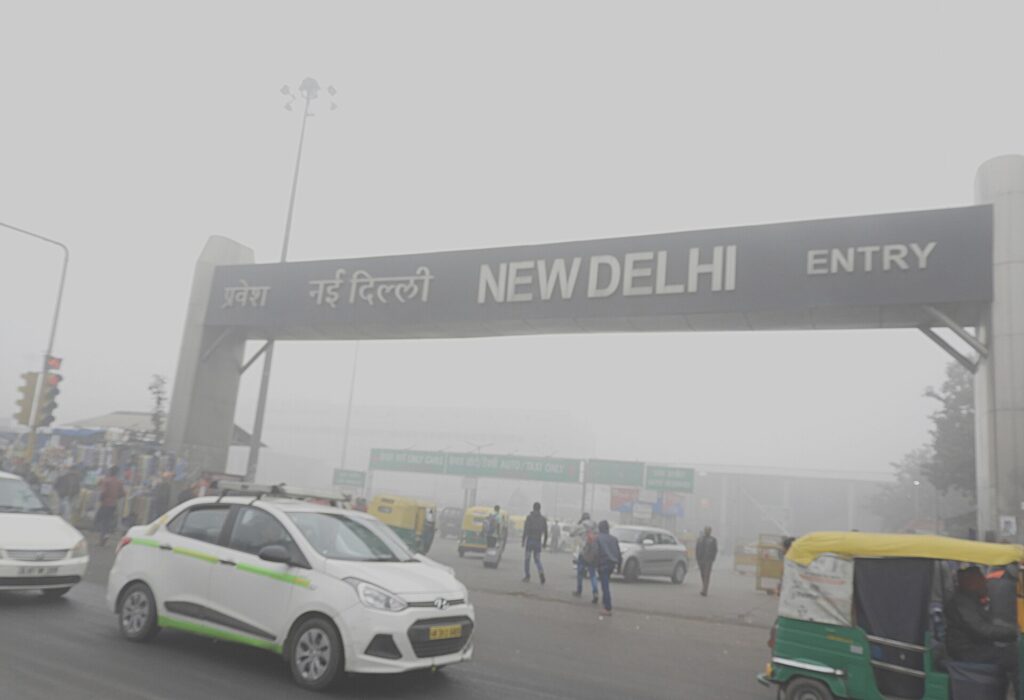
Delhi post-Diwali pollution worsened on November 9 as smoke from festive fireworks added to the capital’s seasonal smog. The Associated Press reported a thick haze across New Delhi after Sunday night’s celebrations, with reduced visibility on roads and around buildings.
Delhi post-Diwali pollution: What changed
The development is the post-festival deterioration, rather than the start of a new pollution season. The capital was already facing poor air before Diwali. Fireworks added another source of emissions to an existing mix of pollutants.
Reading the air-quality figures
India’s air-quality readings depend on the monitoring station and the observation period. A station reading should not be described as a citywide daily average. The Indian Institute of Tropical Meteorology’s Delhi early-warning system showed severe conditions in its November 9 reporting. This brief does not substitute a single monitor for a uniform reading across the capital.
What remains uncertain
Neither a hazy photograph nor a one-day reading establishes the exact share contributed by each pollution source. Determining that requires source-apportionment data. Current station bulletins and official restrictions should take priority over old screenshots circulating online.
Where to follow the update
The linked reporting documents conditions on the morning after Diwali. Air quality can change through the day, so readers checking a later bulletin should compare its timestamp as well as its location.
Delhi post-Diwali pollution: reading an air-quality update
An air-quality report is most useful when the location, measurement period and source are supplied together. A citywide description of smog and a reading at one monitoring station answer different questions. A photograph can show reduced visibility, but it cannot by itself provide a numerical air-quality measurement or identify the exact contribution from each source.
For comparisons, retain the station name and bulletin time instead of sharing a number without context. A later reading may reflect a different interval or location. The official forecasting portal linked below is the appropriate place to check the next bulletin; the archive photograph records an earlier scene. Related local coverage of the Mumbai restrictions also distinguishes an air-pollution report from a fire-safety order.
Related context: Mumbai aerial firecracker ban runs until November 25.
Sources and image credit
This article summarises reporting available by 7:00 p.m. IST on November 9, 2026. Publication may occur later; the actual publication timestamp is retained.
Read the original report; additional source and context.
Archive/representative image: Low visibility due to Smog at New Delhi Railway station 31st Dec 2017 after 9AM DSCN8829 1.jpg by Sumita Roy Dutta, CC BY-SA 4.0. It does not depict this specific news event.
More from our daily edition: Mumbai aerial firecracker ban runs until November 25.